

7 pregnancy snacks that boost your memory
Pregnancy brain fog is real: you leave your keys in the fridge, forget why you walked into a room, and the word on the tip of your tongue vanishes right when you need it. If you’ve already read our article on how to improve your memory during pregnancy, you know there are concrete techniques to keep your mind sharp. Now let’s talk about something just as important: what you eat between meals.
Snacks aren’t just about curbing hunger. Choosing the right ones lets you add key brain nutrients without overcomplicating your day. And the best part: most of these take less than five minutes to prepare.
What nutrients your brain needs during pregnancy
Before we get to the snacks, here’s what matters. Your brain relies on specific nutrients to function well, and during pregnancy the demand goes up.
Your brain needs omega-3 (DHA) to maintain neuron structure, choline to produce acetylcholine (the memory neurotransmitter), antioxidants to protect cells from oxidative stress, iron to transport oxygen, and vitamin E for communication between neurons.
These five nutrients have the strongest evidence for supporting memory. And the good news: you can get all of them from simple snacks.
- Omega-3 (DHA): makes up about 40% of the fatty acids in your brain. Plant sources provide ALA (which the body partially converts to DHA), while fish and eggs supply DHA directly.
- Choline: the National Institutes of Health recommends 450 mg daily during pregnancy. It plays a role in forming memories and in the baby’s brain development.
- Antioxidants: blueberries, berries, and dark chocolate contain flavonoids and anthocyanins that protect neurons from oxidative damage.
- Iron: carries oxygen to the brain. Iron deficiency (common during pregnancy) is linked to mental fatigue and difficulty concentrating.
- Vitamin E: found in nuts and seeds, it improves communication between neurons.
7 snacks that boost your memory
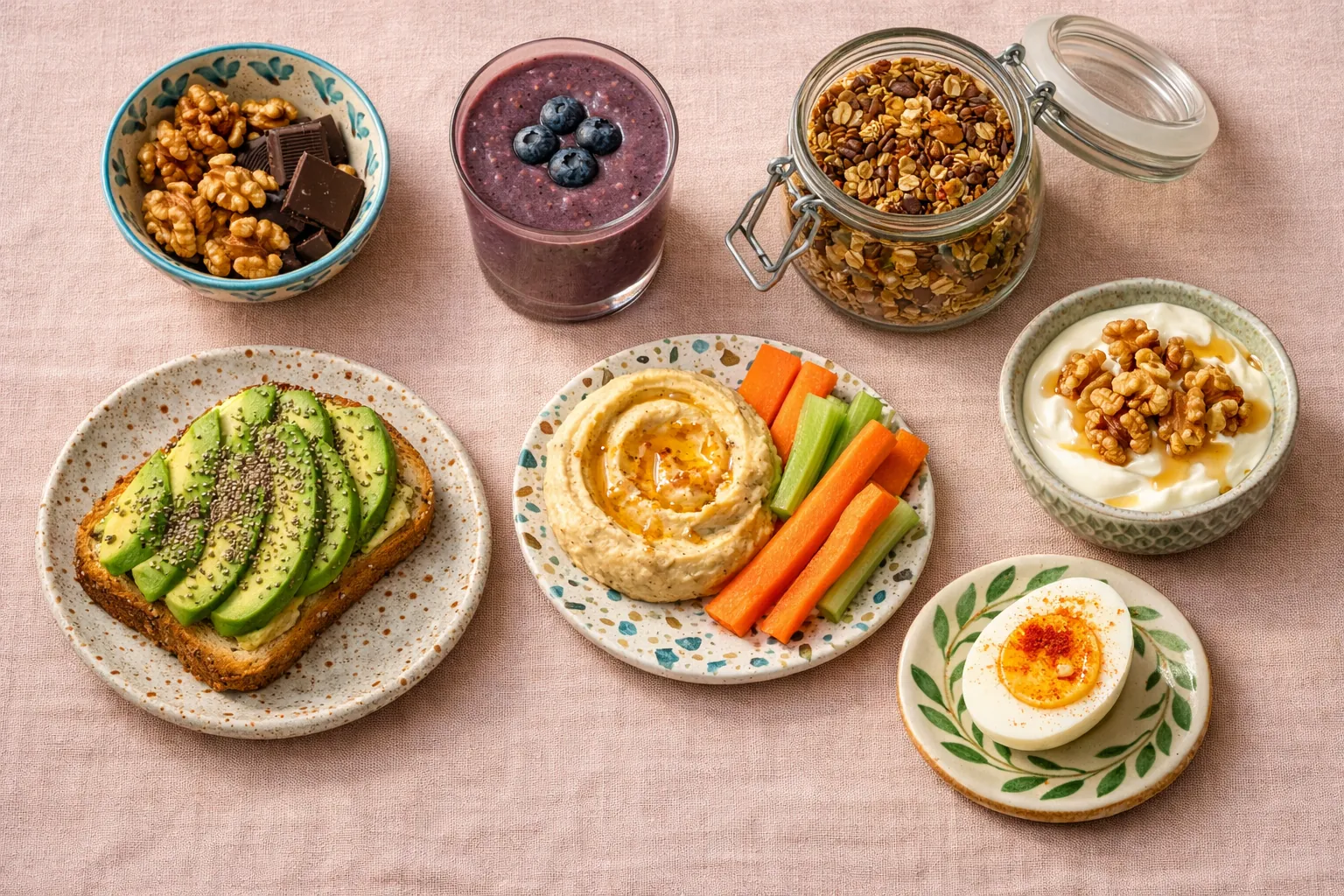
These snacks are organized for variety and practicality. The first five are entirely plant-based, and the last two add animal-based protein. All of them provide at least one key nutrient for memory.
1. Walnut and dark chocolate mix
Key nutrient: omega-3 + flavonoids
Walnuts are one of the best plant sources of omega-3 (ALA), and dark chocolate with 70% or more cocoa delivers flavonoids that stimulate blood flow to the brain. Together, they feed your neurons and satisfy sweet cravings at the same time. Keep in mind that dark chocolate contains some caffeine (about 25 mg per 50 g), so factor it into your daily total if you also drink coffee or tea.
How to prepare: mix a handful of walnuts (about 7-8) with 2 squares of dark chocolate. You can make individual bags for the week and toss one in your purse.
2. Blueberry and spinach smoothie
Key nutrient: antioxidants + iron
Blueberries are one of the richest fruits in anthocyanins, compounds that protect neurons from oxidative stress. Spinach adds iron and folate. With a banana for creaminess, you get a liquid snack your brain will thank you for.
How to prepare: blend 1/2 cup of blueberries (fresh or frozen), a handful of spinach, 1 banana, and a splash of water or plant-based milk. Ready in two minutes.
3. Avocado toast with chia seeds
Key nutrient: omega-3 + healthy fats
Avocado provides monounsaturated fats that support blood flow to the brain. Chia seeds, when ground or soaked beforehand, release omega-3 (ALA) that the body can use. Whole seeds provide fiber, but to access the omega-3 you need to grind them or soak them for at least 15 minutes.
How to prepare: mash half an avocado on a slice of whole grain toast. Grind or soak a tablespoon of chia seeds and sprinkle on top. For extra flavor, add a squeeze of lemon and a pinch of salt.
4. Hummus with carrot and celery sticks
Key nutrient: iron + B vitamins
The chickpeas in hummus provide plant-based iron, fiber, and B vitamins (especially B6, which plays a role in neurotransmitter production). Carrots and celery add crunch, fiber, and vitamin A. It’s a refreshing snack that’s easy to take on the go.
How to prepare: cut carrots and celery into sticks and pair them with 3-4 tablespoons of hummus (homemade or store-bought). If you make it at home, add a squeeze of lemon to improve iron absorption.
5. Homemade granola with flax seeds
Key nutrient: omega-3 + fiber
Flax seeds contain ALA, a type of omega-3 that the body can partially convert to DHA. Combined with oats, walnuts, and a touch of honey, you get a granola that works as a snack on its own or over yogurt.
How to prepare: mix 2 cups of oats, 1/2 cup of chopped walnuts, 1/4 cup of ground flax seeds, 2 tablespoons of honey, and a pinch of cinnamon. Bake at 160 °C (320 °F) for 20 minutes, stirring halfway through. Store in an airtight jar and it lasts all week.
6. Hard-boiled eggs with paprika
Key nutrient: choline
A single large egg provides about 147 mg of choline (roughly one-third of your daily needs), concentrated in the yolk. Choline is essential for producing acetylcholine, the neurotransmitter your brain uses to form and retrieve memories. Paprika adds antioxidants and a flavor boost that turns a simple egg into something more interesting.
How to prepare: boil several eggs at once and store them in the fridge. When you need one, peel it, cut it in half, and sprinkle with sweet paprika and a pinch of salt.
7. Yogurt with walnuts and honey
Key nutrient: probiotics + omega-3
Plain yogurt provides probiotics that support the gut-brain axis (the connection between your gut flora and cognitive function), and walnuts add omega-3 and vitamin E. With a drizzle of honey, it’s a creamy and comforting snack.
How to prepare: scoop a serving of plain yogurt (no added sugar), add a handful of walnuts and a drizzle of honey. For extra antioxidants, toss a few blueberries on top.
Quick nutrient table
| Snack | Key nutrient | Memory benefit |
|---|---|---|
| Walnut and dark chocolate mix | Omega-3 + flavonoids | Stimulate brain circulation |
| Blueberry and spinach smoothie | Antioxidants + iron | Protect neurons and carry oxygen |
| Avocado toast with chia | Omega-3 + healthy fats | Support blood flow to the brain |
| Hummus with carrot and celery | Iron + B vitamins | Support neurotransmitter production |
| Homemade granola with flax | Omega-3 + fiber | Support cognitive function |
| Hard-boiled eggs with paprika | Choline | Acetylcholine production (memory) |
| Yogurt with walnuts and honey | Probiotics + omega-3 | Gut-brain connection and neurons |
Memobebe helps you remember everything
Try for free💡Batch prep: your best friend
Spend 30 minutes on the weekend getting snacks ready for the week: boil eggs, make the granola, cut veggies, and portion everything into individual containers. When hunger hits (and it will), all you have to do is open the fridge and pick one. Your brain will thank you for not having to make decisions in the moment.
Frequently asked questions
How often should I snack during pregnancy?
There’s no fixed number, but most healthcare providers recommend 2-3 snacks between main meals. The key is listening to your body: if you feel hungry between meals, a nutritious snack is better than pushing through or reaching for something ultra-processed. Eat when you need to, not out of obligation.
Can I eat dark chocolate every day?
Yes, in moderate amounts. A couple of squares (about 20-30 g) of chocolate with 70% or more cocoa is a reasonable portion. Keep in mind that dark chocolate contains caffeine (around 25 mg per 50 g), so factor it into your daily total along with coffee or tea. The ACOG recommends staying under 200 mg of caffeine per day during pregnancy.
One thing to keep in mind: dark chocolate contains polyphenols that can reduce iron absorption. If you take iron supplements or eat iron-rich foods, leave a couple of hours between them and your chocolate so they don’t interfere with each other.
What snacks should I avoid during pregnancy?
Avoid snacks with raw fish (like sushi or ceviche), unpasteurized soft cheeses, unheated deli meats, and products with excess added sugar or trans fats. It’s also better to limit packaged cookies and bars with long ingredient lists full of things you can’t pronounce. If you have questions about a specific food, check with your OB-GYN or nutritionist.
Eating well during pregnancy doesn’t have to be complicated. With these 7 snacks, you can add key brain nutrients without spending hours in the kitchen. And if brain fog makes it hard to keep track of what you eat or your medical appointments, Memobebe helps you organize everything in one place.
For a complete guide on what to eat each trimester, check out our pregnancy nutrition guide. Explore more ideas in our nutrition section.
Related articles
No-cook summer meals for pregnancy
7 no-cook summer meals for pregnancy: fresh, listeria-safe, and built for the hottest days when the oven stays off.
Anti-gas dinners in the third trimester of pregnancy
6 gentle dinners to ease gas and bloating in late pregnancy: what to avoid, how to combine, and why onion and unpeeled legumes don't help.
What to eat to heal episiotomy stitches after birth
What helps episiotomy or perineal tear healing after birth: protein, zinc, vitamin C, and 6 gentle anti-constipation recipes.