

Postpartum recipes if you have hemorrhoids
Postpartum hemorrhoids affect 30-40% of women after a vaginal birth and 20% after a c-section, according to data published in the American Journal of Obstetrics & Gynecology (Abramowitz et al., 2017). They aren’t a failure of your body, they’re the mechanical consequence of months of pelvic venous pressure and, if you had a vaginal birth, the effort of pushing. The good news: most clear up on their own in 4-8 weeks if your diet helps the process along.
This guide gives you 7 single-serving recipes, a simple way to tell what softens your stools and what hardens them, and how the approach shifts between the first and second postpartum week.
ℹ️This is a general guide
Amounts, cooking times, and nutritional notes here are approximate. They depend on the cut, the oven, your body, and your clinical situation. This isn’t a substitute for your healthcare provider: if your OB-GYN, midwife, or nutritionist gave you different advice, always follow theirs over this guide.
The actual nutritional goals: 3 things
It’s not about “eating healthy” in general. It’s about:
- Soft but formed stools that don’t require pushing. That protects the inflamed area and prevents fissures.
- Steady hydration. Fiber without enough water has the opposite effect: it hardens stools instead. Keeping a water bottle within reach, especially during feeds if you’re breastfeeding, usually does the trick.
- Bringing inflammation down. Omega-3, antioxidants, and skipping the triggers (spicy food, too much caffeine, alcohol, heavily processed food).
What doesn’t help, even though a lot of people think it does: white rice as the main meal (astringent), unripe banana (astringent), too much aged cheese (constipating).
The 4 food categories for postpartum hemorrhoids
| Function | Foods | Evidence |
|---|---|---|
| Natural softeners (soluble fiber + water) | Oats, soaked prunes, ripe kiwi, pears, ground flax, soaked chia, papaya | Solid (standard gastroenterology recommendations) |
| Gut lubricants | Raw olive oil, avocado, almonds, pumpkin seeds | Anecdotal + physiological basis |
| Anti-inflammatory | Turmeric, ginger, salmon, sardines, chia, flax, red berries | Moderate to solid |
| Astringents (skip these) | White rice as the main dish, green banana, strong black tea, too much aged cheese, peeled apple | Well established |
7 single-serving recipes
1. Oats, flax, and prunes bowl (the most anti-hemorrhoid)
Ingredients:
- 50 g whole rolled oats
- 1 tablespoon (10 g) ground flax seeds
- 4 prunes soaked overnight
- 200 ml almond milk or regular milk
- 1 teaspoon maple syrup (optional)
- 1 tablespoon plain yogurt or kefir
Preparation: cook the oats with the milk for 5 minutes. Stir in the flax and chopped prunes. Top with the yogurt right before serving.
Why it works:
- Ground flax (not whole, since whole passes through intact) creates a mucilage that lubricates the gut.
- Prunes contain sorbitol, a natural sugar with a mild laxative effect.
- Yogurt adds probiotics for healthy gut flora.
When: breakfast. The flax + prunes combo is one of the most reliable ways to get things moving in the morning.
2. Warm apple and pear compote with cinnamon
Ingredients:
- 1 large apple with skin (200 g) cubed
- 1 ripe pear with skin (180 g) cubed
- 1 cinnamon stick
- 100 ml water
- 1 tablespoon raisins (optional)
Preparation: simmer everything on low heat for 12 minutes. Serve warm.
Why it works: cooked fruit with the skin on keeps the fiber without the friction a raw apple would cause. Cinnamon is anti-inflammatory. Eaten warm, it supports peristalsis (the natural gut movements that push stools forward).
When: breakfast or snack.
3. Red lentil cream with pumpkin and cumin
Ingredients:
- 100 g red lentils (about 250 g cooked)
- 200 g peeled pumpkin in cubes
- 1 teaspoon ground cumin
- 1 teaspoon turmeric
- 1 teaspoon freshly grated ginger
- 500 ml vegetable broth
- 1 tablespoon olive oil to serve
Preparation: simmer everything for 20 minutes until it falls apart. Blend until smooth. Drizzle the raw olive oil on top right before serving.
Why it works:
- Red lentils: high fiber without the tough skin that produces gas.
- Cumin: carminative (helps with gas that increases abdominal pressure).
- Turmeric + ginger: strong anti-inflammatories.
- Raw oil: gut lubricant.
When: lunch or dinner. Filling, anti-inflammatory, and easy to digest.
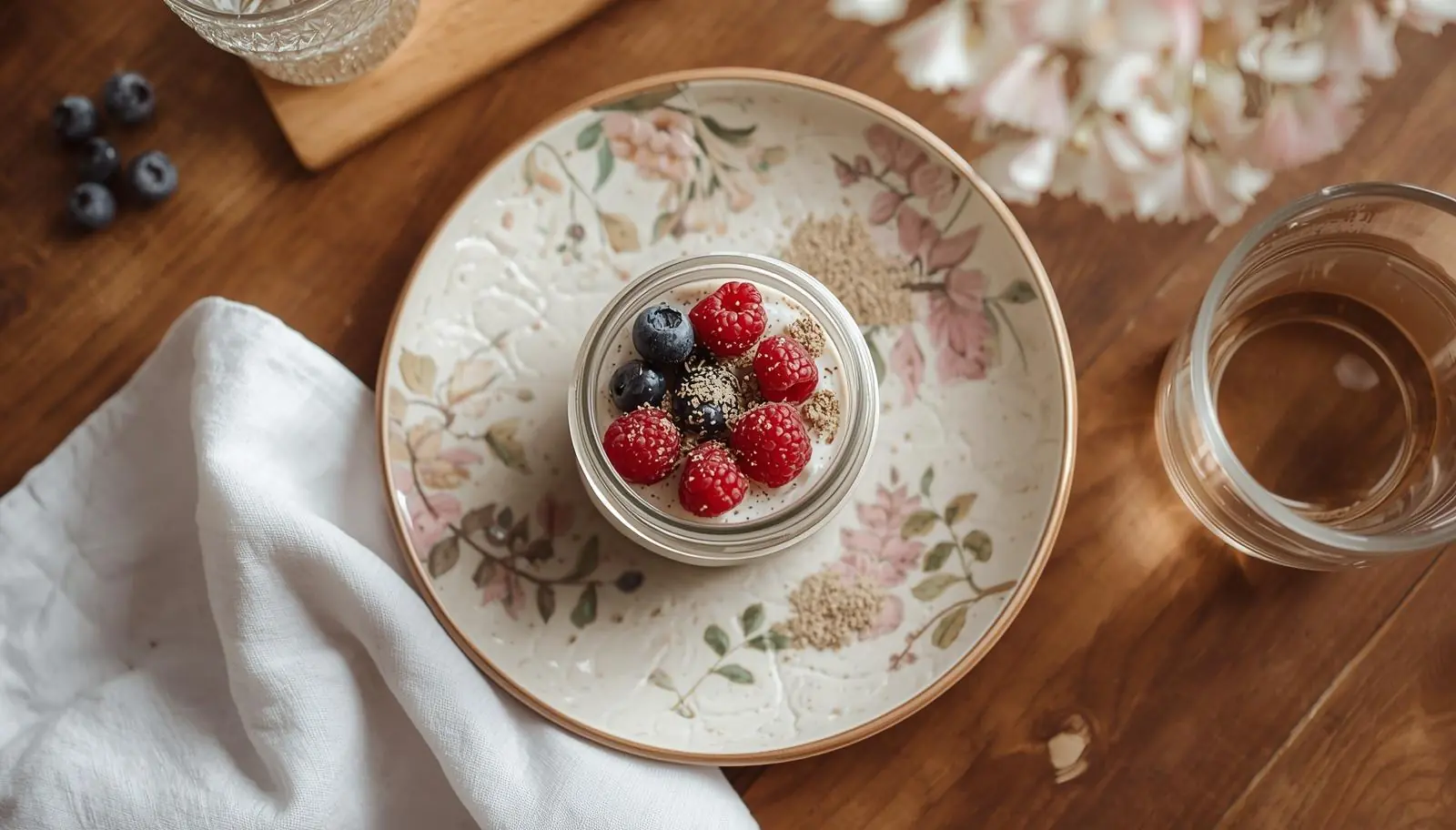
4. Chia pudding with red berries and kefir
Ingredients:
- 3 tablespoons (40 g) chia seeds
- 250 ml fortified almond or oat milk
- 100 g raspberries + blueberries
- 100 ml plain kefir
- 1 teaspoon raw honey
Preparation: stir the chia into the milk the night before. Refrigerate for at least 6 hours. Top with berries and kefir right before serving.
Why it works:
- Soaked chia: a mucilaginous gel that’s one of the most effective natural lubricants.
- Red berries: vitamin C (helps with healing) + antioxidants.
- Kefir: probiotics.
When: breakfast or snack. Perfect to make the night before.
5. Sautéed zucchini and potato with olive oil
Ingredients:
- 1 medium zucchini peeled and cubed
- 1 medium potato peeled and cubed
- 1 generous tablespoon extra virgin olive oil (raw at the end)
- 1 teaspoon turmeric
- Pinch of salt
Preparation: boil the potato for 8 minutes until soft. Sauté the zucchini for 5 minutes with a little oil and the turmeric. Combine and drizzle the raw olive oil on top right before serving.
Why it works: cooked vegetables without fats that slow digestion. Raw oil (not cooked) works as a natural gut lubricant.
When: dinner. Soft, easy to digest, with raw olive oil to help things move through.
6. Baked white fish with sweet potato and green beans
Ingredients:
- 130 g hake, sole, or sea bream without bones (vegetarian alternative: 130 g pressed firm tofu)
- 200 g peeled sweet potato in slices
- 100 g thin green beans
- 1 tablespoon olive oil
- Lemon to serve
- Pinch of salt and dill
Preparation: bake the sweet potato at 200 °C for about 15 minutes. Add the fish and beans and bake another 10-12 minutes, until the fish flakes easily with a fork (cooked through, no translucent parts in the center). Serve with lemon. Cooking times are approximate and depend on the thickness of the fillet.
Why it works:
- Sweet potato: gentle fiber, doesn’t produce gas, sweet and very well tolerated.
- White fish: protein for healing (important if there was an episiotomy or tear).
- Green beans: moderate fiber without bloating.
When: lunch or dinner. White fish for healing, sweet potato for gentle fiber, and green beans that add moderate fiber without bloating.
7. Papaya smoothie with ginger and hemp seeds
Ingredients:
- 200 g ripe peeled papaya
- 1 cm fresh ginger
- 1 tablespoon hemp seeds
- 250 ml coconut water
- Ice (optional)
Preparation: blend everything for 1 minute.
Why it works: papaya contains papain, an enzyme that helps digestion. Ginger is anti-inflammatory and reduces gas. Hemp adds omega-3 and protein.
When: snack. Brings digestive enzymes (papain from papaya) and plenty of hydration.
Memobebe helps you remember everything
Try for freeHow to use the recipes in the first 2 weeks
Week 1: acute phase
Your gut is slower and the area is inflamed. Lean on the softer, more lubricating recipes: oats with flax and prunes (1), warm apple and pear compote (2), red lentil cream (3), chia pudding (4), sautéed zucchini and potato (5). Add water between meals and gentle movement.
Week 2: transition
As the inflammation goes down, you can slowly bring back:
- Whole grains (not just white)
- Whole legumes (instead of only blended)
- Nuts in larger amounts
- Limited coffee (1 cup max, away from iron meals)
The 7 recipes still work as a base. You can branch out into chickpea flour pancake with vegetables, warm lentil salad with avocado, or baked fish with roasted vegetables.
Keeping track of what you ate and how you felt each day makes it easier to spot what softens things and what hardens them. With memobebe you can log it in the same place as your baby’s feeds and your postpartum check-ups, without adding another notebook to the pile.
The bathroom rule that lowers pressure more than any food
This is worth more than any recipe and almost no one mentions it:
- Put your feet up on a 15-20 cm stool while sitting on the toilet. That raises your knees above your hips and lines the rectum up the way it’s meant to be when you go (the same position humans used when squatting on the ground).
- Don’t push with your abdomen. If it isn’t coming, get up and come back in 10-15 minutes.
- Don’t scroll on your phone on the toilet. Sitting more than 5 minutes increases venous pressure.
- Rinse with warm water, not dry paper. A peri bottle or portable bidet cuts down on irritation.
💡The peri bottle trick
Peri bottles are designed for this and are sold at any pharmacy. If you reuse a plastic bottle, wash it thoroughly with soap and water first (no need to sterilize, just clean). Fill it with warm water. Every time you go to the bathroom, rinse with the bottle instead of rubbing with paper. It makes a huge difference for irritation.
What to skip the first 2 weeks
These foods tend to make postpartum hemorrhoids worse and are worth cutting back on:
| Category | Why |
|---|---|
| Spicy food, chili, hot sauces | Capsaicin partially passes through the gut and irritates the area |
| Strong coffee (more than 1 cup/day) | Diuretic + stimulant, dehydrates stools |
| Alcohol | Dehydrates + inflames veins |
| Aged cheeses (parmesan, aged manchego) | Astringent, almost no fiber |
| White rice as the main dish | Astringent, no fiber |
| Green or unripe banana | Astringent; very ripe is fine |
| Fizzy drinks | Increase abdominal pressure |
| Peeled fruits | Most of the fiber gets lost with the skin |
Frequently asked questions
How long do postpartum hemorrhoids last?
Most clear up in 4-8 weeks if diet and bathroom habits help the process along. If they’re still bothering you after 8 weeks, or they bleed or hurt a lot, talk to your healthcare provider. Sometimes a procedure is needed, but only in a minority of cases.
Can I take laxatives postpartum if I’m breastfeeding?
Some osmotic laxatives (lactulose, polyethylene glycol) are compatible with breastfeeding. Stimulants (senna, cascara) aren’t routinely recommended. Before reaching for medication, try the recipes in this guide for 5-7 days. In most cases things resolve without it.
Are anti-hemorrhoid creams safe during breastfeeding?
Topical creams (low-dose hydrocortisone or local anesthetics like lidocaine) are usually compatible. Check with your healthcare provider on which one to use and apply it sparingly.
Why do they get worse at the end of the day?
Standing or sitting for long stretches increases pelvic venous pressure. Lying down with your feet up on cushions for 10-15 minutes, 2-3 times a day, brings the inflammation down noticeably.
Does a c-section protect me from hemorrhoids?
It cuts the risk in half compared to a vaginal birth, but it doesn’t eliminate it. Hemorrhoids also come from pregnancy, not just the birth. Postpartum constipation (common after a c-section because of the anesthesia) can trigger them.
Postpartum hemorrhoids are common, uncomfortable, and almost always temporary. Diet is the most effective tool you have: anti-inflammatory and softening recipes combined with hydration and good bathroom posture clear up most cases in 4-8 weeks. If you want a tool to keep you company through postpartum, one that helps you see patterns without having to remember everything, memobebe is built for this.
Find more on postpartum nutrition in our nutrition section.
Related articles
No-cook summer meals for pregnancy
7 no-cook summer meals for pregnancy: fresh, listeria-safe, and built for the hottest days when the oven stays off.
Anti-gas dinners in the third trimester of pregnancy
6 gentle dinners to ease gas and bloating in late pregnancy: what to avoid, how to combine, and why onion and unpeeled legumes don't help.
What to eat to heal episiotomy stitches after birth
What helps episiotomy or perineal tear healing after birth: protein, zinc, vitamin C, and 6 gentle anti-constipation recipes.