

Postpartum recipes after vaginal birth: first 2 weeks
The first 2 weeks after a vaginal birth are a mix of three simultaneous physical demands: your body is healing perineal tissue (especially if there was tearing or an episiotomy), replacing the 300-500 ml of blood lost during birth, and starting milk production if you decided to breastfeed. Meanwhile, your sleep is 4-5 fragmented hours and your stomach is settling back into shape after months of compressed space.
To keep you company through these two weeks, this post is organized into 3 phases by day (1-3, 4-7, 8-14) with single-serving recipes, a batch-cooking section to prep food before the baby arrives or when visitors are coming, and the points where vaginal postpartum differs from c-section postpartum (because the needs are different).
ℹ️This is a general guide
Amounts, cooking times, and nutritional notes here are approximate. They depend on the cut, the oven, your body, and your clinical situation. This isn’t a substitute for your healthcare provider: if your OB-GYN, midwife, or nutritionist gave you different advice, always follow theirs over this guide.
The 4 nutritional priorities of vaginal postpartum
Before we get to the recipes, the priorities:
- Iron (to replace the lost blood). Extreme fatigue that persists past week 2 suggests low levels: ask your healthcare provider to check your ferritin at the postpartum visit.
- Protein (perineal healing, milk production). Recommendations for breastfeeding mothers are slightly higher than outside pregnancy (Institute of Medicine, 2005); the exact figure depends on your weight and overall diet, so it’s worth confirming with your healthcare provider.
- Hydration. Especially high if you’re exclusively breastfeeding. A bottle always within reach during feeds helps more than any number.
- Gentle fiber (to avoid postpartum constipation, which can be very painful with tearing or an episiotomy): cooked fruit, ground flax, cooked oats. Skip the hard fiber (pure bran, legumes with skin) the first few weeks.
ℹ️Vaginal postpartum vs c-section: the key differences
Vaginal: priority on perineal healing + breastfeeding + replacing blood. Hydration is critical to avoid constipation (pushing hurts in the stitches area). More flexibility with meals than after a c-section (no restrictions tied to post-surgery digestion).
C-section: priority on abdominal healing + avoiding gas that pushes against the wound. First 48-72h on a progressive diet (liquid → soft → normal). Skip gas-formers (broccoli, cauliflower, cabbage) for the first 2 weeks. We’ll cover this in another post if it applies to you.
The 14-day plan in 3 phases
Phase 1: Days 1-3 (hospital discharge, first hours at home)
Your body is in energy-conservation mode. Digestion is slow. Your gut takes 48-72h to find its normal rhythm.
What to eat:
- Nutritious broths (chicken, vegetables): hydration + minerals
- Warm apple and pear compotes
- Cooked oats with banana
- White rice with soft vegetables
- Plain yogurt with honey
- Toast with avocado
- Plenty of water (bottle within reach, especially during feeds)
What to still skip:
- Heavily seasoned or fried foods
- Whole legumes (blended is better)
- Strong coffee (1 small cup is plenty, away from iron-rich meals)
- Raw cruciferous vegetables
Phase 2: Days 4-7 (finding a rhythm)
You’re home, the lochia is tapering off, breastfeeding is settling in. Constipation can show up now if you didn’t head it off with hydration + gentle fiber.
What to add:
- Vegetable creams with tofu or chicken
- Quinoa with cooked vegetables
- Baked salmon with sweet potato (or pressed firm tofu in its place)
- White fish baked in parchment (or pressed firm tofu in its place)
- Smoothies with chia, banana, and red berries
- A small amount of nuts (10-15 almonds a day)
Phase 3: Days 8-14 (easing back to normal)
You’re digesting normally again. Bring back anything your body handles well, with an eye on nutrient density.
No restrictions, with a focus on: well-cooked legumes, warm salads (not too cold), oily fish twice a week, fruits with skin, a variety of seeds.
7 single-serving recipes
1. Nourishing chicken and vegetable broth (days 1-3)
Ingredients (makes 4 servings, freezable):
- 1 chicken carcass or 2 thighs (vegetarian alternative: vegetables only + 1 small piece of kombu seaweed for minerals)
- 2 carrots, sliced
- 1 leek
- 1 celery stalk
- 1 cm ginger
- 2 liters of water
- Salt to taste
Preparation: place all ingredients in a large pot with cold water. Bring to a boil, then lower the heat to a simmer. Cook on low for 2 hours, skimming the foam off the top. Strain the broth (discard bones and vegetables). Serve hot with a handful of thin noodles or a little cooked rice.
Why it works: hydration + minerals + collagen from the bone broth. Gentle on digestion in the first days postpartum.
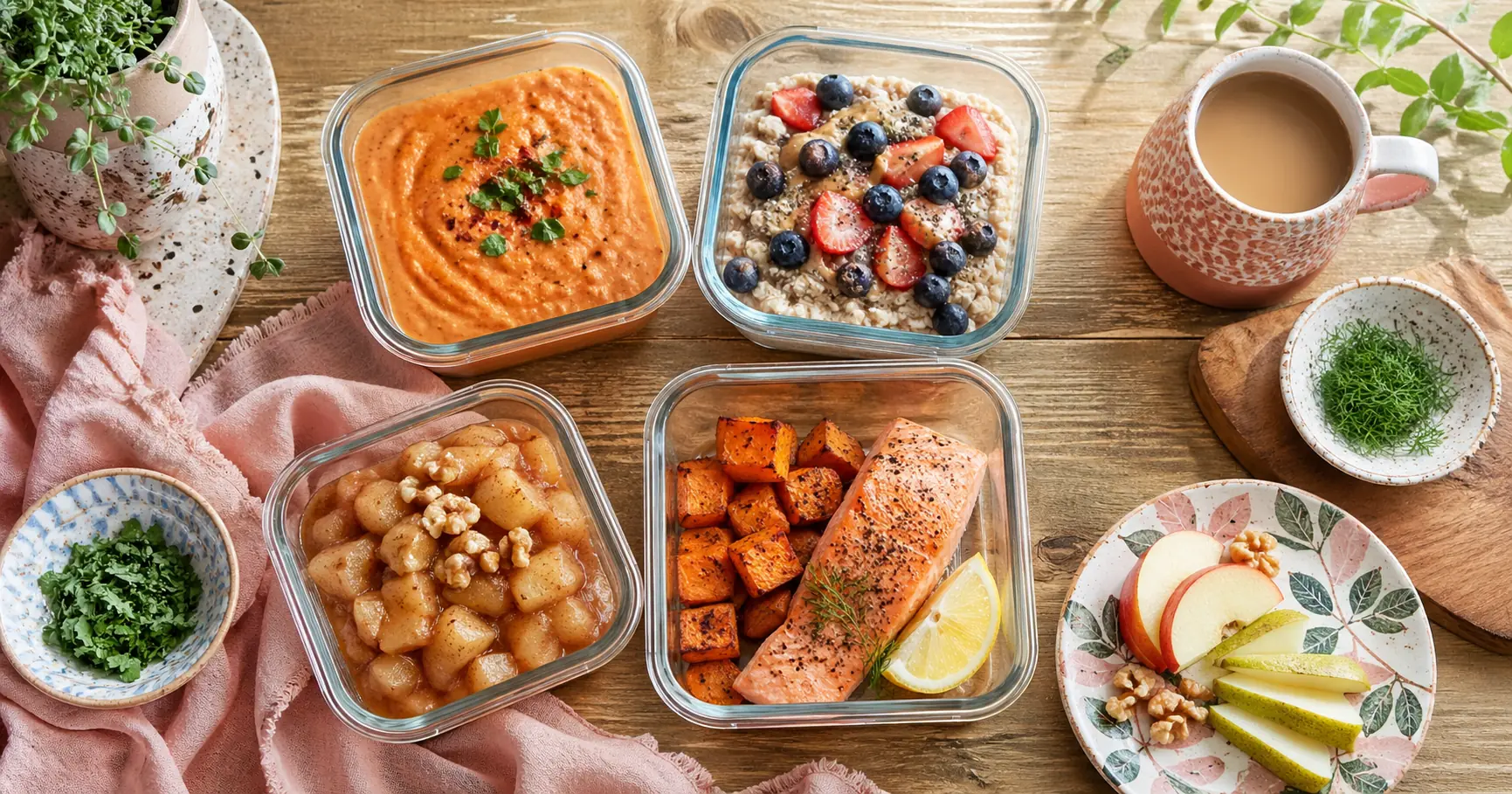
2. Warm apple, pear, and prune compote (days 1-7)
Ingredients (4 servings):
- 3 apples with skin in cubes
- 2 ripe pears with skin in cubes
- 6 soaked prunes
- 1 cinnamon stick
- 200 ml water
Preparation: put the cubed fruit, prunes, cinnamon, and water in a saucepan. Simmer on low for 15-20 minutes until everything is soft and falls apart when pierced with a fork. Let it cool and keep it in the fridge. Warm slightly before serving.
Why it works: gentle, anti-inflammatory fiber. Prevents postpartum constipation without pushing, and keeps for several days in the fridge.
3. Red lentil cream with pumpkin and turmeric
Ingredients (4 servings, freezable):
- 200 g red lentils
- 400 g peeled pumpkin
- 2 carrots
- 1 medium potato
- 1 tablespoon turmeric
- 1 cm ginger
- 1 liter of broth
- Olive oil to serve
Preparation: rinse the red lentils well (under running water until the water runs clear). Add everything to a pot with the broth. Bring to a boil and simmer on medium-low for 25 minutes until the lentils and vegetables fall apart. Blend until smooth. Serve with a generous drizzle of raw olive oil on top.
Why it works: red lentils (skinless) bring iron and protein without producing the gas that can bother you postpartum. Turmeric and ginger add anti-inflammatory action. Freezes well in single portions.
4. Cooked oats with chia, flax, and red berries
Ingredients (single serving):
- 50 g rolled oats
- 1 tablespoon chia
- 1 tablespoon ground flax
- 250 ml calcium-fortified oat milk
- 80 g red berries
- 10 almonds
Preparation: in a small saucepan, cook the oats with the plant milk on low heat for 5 minutes, stirring occasionally, until creamy. Take off the heat and stir in the chia and ground flax. Serve hot or warm, topped with the red berries and almonds.
Why it works: combination of gentle fiber (oats, chia, flax) and antioxidants (red berries). Steady energy for the morning.
5. Baked salmon with sweet potato and asparagus
Ingredients:
- 130 g salmon without bones (vegetarian alternative: 130 g pressed firm tofu)
- 200 g peeled sweet potato in slices
- 100 g green asparagus
- 1 tablespoon olive oil
- Lemon to serve
Preparation: preheat the oven to 180 °C. Lay the sliced sweet potato on a tray with a drizzle of oil and bake for 12 minutes. Add the salmon (or tofu) and the asparagus, drizzle with a little more oil, and bake another 12-15 minutes, until the salmon flakes easily with a fork (cooked through, no translucent parts in the center). Serve with lemon.
Why it works: salmon brings omega-3s (supports healing + baby’s brain development through the milk), sweet potato is gentle fiber, and asparagus adds folate.
6. Quinoa bowl with chickpeas, pepper, and lemon
Ingredients:
- 70 g raw quinoa
- 100 g cooked chickpeas
- 1/2 raw red pepper in strips
- 1 tablespoon toasted pumpkin seeds
- Fresh parsley
- 1 tablespoon lemon juice
- 1 teaspoon olive oil
Preparation: rinse the quinoa under the tap until it stops foaming. The saponins shouldn’t be eaten and rinsing washes them away (they can also leave a bitter taste). Cook until the grains open. Mix warm with everything else. Dress with the lemon and oil.
Why it works: a dish built around iron (quinoa + chickpeas + pumpkin seeds) with raw pepper and lemon to take advantage of vitamin C. No tahini or dairy here, specifically so they don’t block iron absorption.
7. Restorative smoothie (snack or breakfast when you can’t cook)
Ingredients:
- 250 ml oat milk
- 1 ripe banana
- 1 tablespoon almond butter
- 1 tablespoon pure cocoa
- 2 dates
- Ice
Preparation: put everything in a blender or shaker and blend for 1 minute until smooth and creamy. Drink right away.
Why it works: dense, liquid energy for when you can’t stop to cook. Pure cocoa adds plant iron and antioxidants.
Memobebe helps you remember everything
Try for freeHow to combine the recipes in the first 2 weeks
These recipes can be mixed and matched freely. Two guidelines to make them work better:
- Don’t put iron and calcium in the same meal. The quinoa bowl with chickpeas (recipe 6) is built for iron: don’t mix it with tofu or tahini on the same plate. Chia pudding with soy milk (doesn’t show up in this post but you’ve seen the pattern in the others) would be a calcium meal. And keep iron supplements away from dairy.
- Add vitamin C to iron-rich meals. Raw red pepper, lemon, orange, kiwi, or strawberries in small amounts make a real difference.
How you spread meals across the day comes down to your hunger, your baby’s schedule, and any guidance from your healthcare provider. If your OB-GYN or nutritionist gave you a specific plan, always follow that. And if it helps you keep track of how you feel and what you ate on so little sleep, memobebe is built so logging takes one tap.
Batch-cooking: what to prep before the baby arrives
If you’re still pregnant (weeks 36-40), or if someone can cook for you the first few weeks, freeze this:
| Recipe | Servings | How to freeze |
|---|---|---|
| Nourishing chicken broth (or vegetable + kombu) | 8-10 | In 250 ml containers |
| Red lentil cream with pumpkin | 6 | In single-serving containers |
| Pumpkin, carrot, and ginger cream | 6 | In single-serving containers |
| Lentil burgers (uncooked) | 8 | Raw, separated with parchment |
| Apple, pear, and prune compote | 4 | In small jars |
| Stewed chicken (or stewed tofu in its place) | 4 | In portions |
That batch covers 10-12 dinners or meals. The difference between having this ready and not is huge when you’re with a newborn.
When breastfeeding changes the math
If you’re exclusively breastfeeding, the general guidance (Institute of Medicine, 2005; WHO) is to eat a bit more and drink quite a bit more, without getting into specific numbers since they vary a lot from body to body and baby to baby. In practice:
- An extra protein snack between meals: yogurt + nuts, hummus with vegetables, restorative smoothie.
- Water bottle within reach during feeds. Hydration is one of those things you notice most when you’re short on it.
- This isn’t the time to diet. Extreme restriction hits milk production and energy. If you’re worried about weight, talk to your healthcare provider, but postpartum isn’t the phase for restriction.
Frequently asked questions
Do I have to take an iron supplement postpartum?
If your blood loss was significant or your hemoglobin was low at discharge, your healthcare provider probably will recommend supplementation. The recipes in this guide help, but may not be enough on their own. Ask for a ferritin check at the postpartum visit (week 6) to confirm.
Can I eat sushi and cured meats again?
Yes. Once you’re past pregnancy, the listeria and toxoplasmosis restrictions don’t apply anymore. The one exception is if you’re exclusively breastfeeding: keep being careful with high-mercury fish (large bluefin tuna, swordfish).
How long does it take for digestion to get back to normal?
Between 1 and 3 weeks. Your gut takes time to recover its rhythm after birth and the painkillers. If you still have severe constipation or very slow digestion after 2 weeks, bring it up at your postpartum check-up.
Can I have coffee and alcohol while breastfeeding?
Coffee: up to 200 mg of caffeine per day (1-2 small cups) is safe. Alcohol: occasional moderate intake is acceptable while breastfeeding (an occasional glass of wine or beer, taken right after a feed so time passes before the next one). Don’t make it a habit.
When will my energy come back?
The first 2 weeks your energy is low because of blood loss + breastfeeding + fragmented sleep. By week 3-4 you should notice it picking up. If extreme fatigue lasts past 4 weeks, anemia could be at play. Get your ferritin checked and talk to your provider.
The first 2 weeks of vaginal postpartum are physically intense, but with nutrition planned in phases, batch-cooking ready ahead of time, and a focus on iron, protein, and hydration, you come through with enough energy. The body knows how to recover: what you can do is give it what it needs and rest as much as you can. If you want a tool to keep you company through this stage, one that tracks everything (the baby, you, the meals, the check-ups) without you having to remember it all, memobebe is built for this.
Find more on nutrition and recovery in our nutrition section.
Related articles
No-cook summer meals for pregnancy
7 no-cook summer meals for pregnancy: fresh, listeria-safe, and built for the hottest days when the oven stays off.
Anti-gas dinners in the third trimester of pregnancy
6 gentle dinners to ease gas and bloating in late pregnancy: what to avoid, how to combine, and why onion and unpeeled legumes don't help.
What to eat to heal episiotomy stitches after birth
What helps episiotomy or perineal tear healing after birth: protein, zinc, vitamin C, and 6 gentle anti-constipation recipes.