

Iron-rich foods for pregnancy: a practical guide
During pregnancy, your blood volume increases by about 50%. That means your body needs significantly more iron to produce hemoglobin and carry oxygen, both for you and your baby. The problem: many women enter pregnancy with low iron reserves and struggle to meet that extra demand.
The result can be extreme fatigue, difficulty concentrating, and in more serious cases, anemia. The good news is that with mindful eating you can prevent all of that. For a broader look at prenatal nutrition, check out our pregnancy nutrition guide.
How much iron do you need during pregnancy
Before pregnancy, your body needed about 18 mg of iron per day. That number rises considerably once pregnancy begins.
During pregnancy, the body needs 27 mg of iron per day, a 50% increase over normal requirements. Iron carries oxygen to your baby and supports the expansion of blood volume that occurs during pregnancy.
This recommendation comes from the American College of Obstetricians and Gynecologists (ACOG) and aligns with Mayo Clinic guidelines. Most prenatal vitamins include iron, but food remains your best ally for keeping reserves high.
ℹ️About supplementation
This guide focuses on food sources of iron. We are not recommending supplementation on our own. If you think you may need an iron supplement, talk to your doctor so they can evaluate your situation and recommend the right dosage.
Heme vs. non-heme iron
Not all iron is absorbed equally. There are two types, and understanding the difference helps you build better combinations on your plate.
Non-heme iron (plant-based): found in spinach, lentils, chickpeas, quinoa, tofu, and fortified cereals. Your body absorbs between 2% and 20% of what you eat, depending on what else is on your plate.
Heme iron (animal-based): found in lean red meat, chicken, turkey, and fish. Your body absorbs between 15% and 35%, making it more efficient per serving.
ℹ️Boost your plant-based iron absorption
Non-heme iron is absorbed much better when you pair it with vitamin C. A squeeze of lemon over your lentils makes a real difference. Try adding bell pepper, tomato, or kiwi to your iron-rich meals too. On the flip side, calcium competes with iron for absorption. Avoid pairing calcium-rich foods (dairy, cheese) with your main iron-rich meals. You can have dairy at other times of the day.
Does this mean plant sources are not worth it? Not at all. With the right combinations, a plant-based diet can cover your iron needs during pregnancy.
Top iron-rich foods
This table summarizes the most accessible iron sources.
| Food | Iron per serving | Type |
|---|---|---|
| Cooked lentils (1 cup) | 6.6 mg | Non-heme |
| Cooked spinach (1 cup) | 6.4 mg | Non-heme |
| Chickpeas (1 cup) | 4.7 mg | Non-heme |
| Firm tofu (1/2 cup) | 3.4 mg | Non-heme |
| Dark chocolate 70%+ (30 g) | 3.4 mg | Non-heme |
| Cooked quinoa (1 cup) | 2.8 mg | Non-heme |
| Pumpkin seeds (1/4 cup) | 2.5 mg | Non-heme |
| Lean beef (85 g) | 2.6 mg | Heme |
| Sardines (85 g) | 2.4 mg | Heme |
| Chicken breast (85 g) | 1.1 mg | Heme |
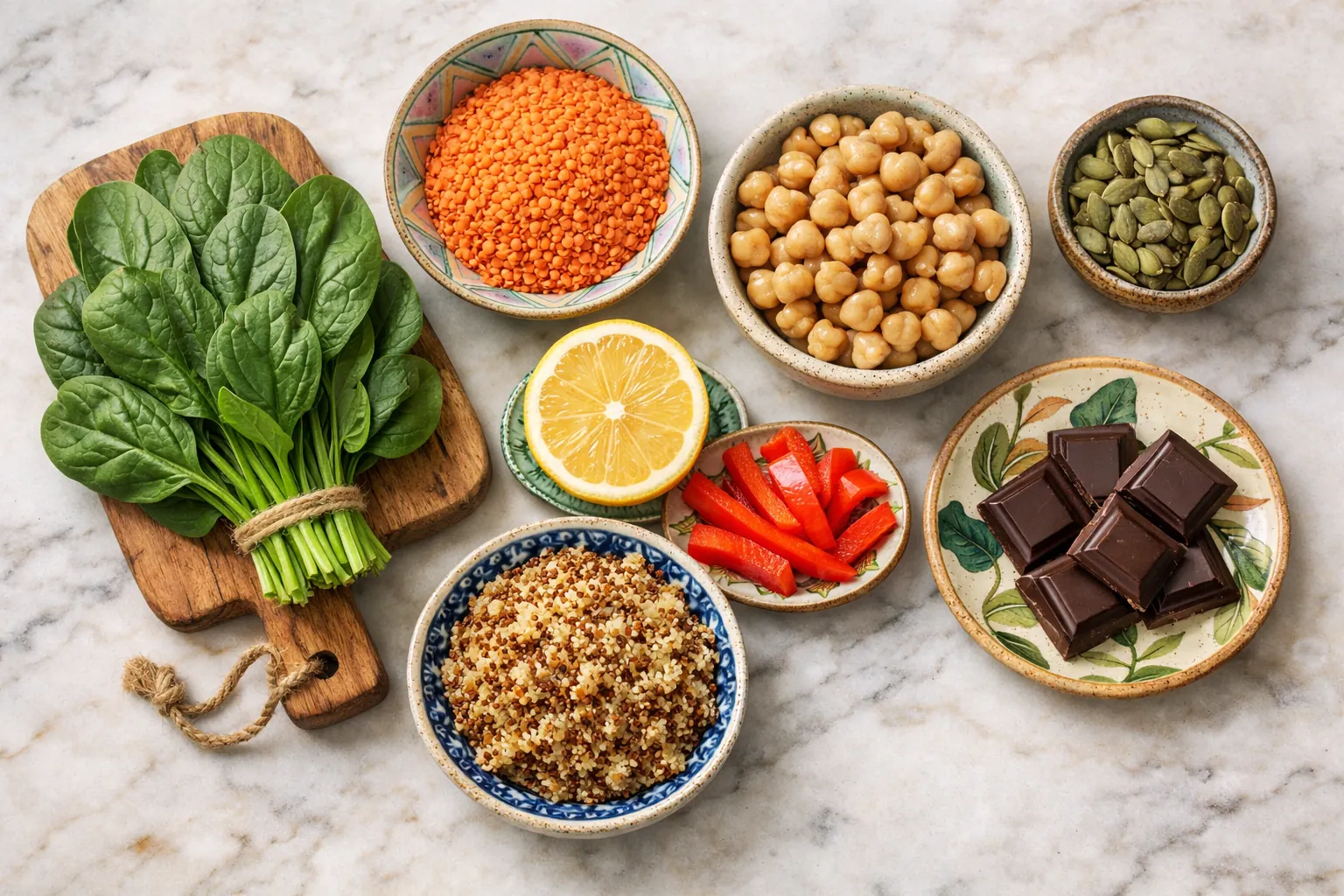
A bowl of lentils with bell pepper and lemon already gives you more than half the daily iron you need. A note on spinach: although rich in iron, it contains oxalates that reduce absorption. Spinach works better paired with vitamin C than as a primary iron source. Lentils and chickpeas are more efficient options.
How to boost iron absorption
Eating iron-rich foods is not enough on its own: what you eat alongside them can double or block absorption. These tips help you make the most of every milligram.
- Pair with vitamin C: add lemon, orange, tomato, or bell pepper to your iron-rich meals. Vitamin C can double or triple the absorption of non-heme iron.
- Avoid dairy at the same meal: the calcium in milk, cheese, and yogurt competes with iron for absorption. Separate them by at least one hour.
- Keep coffee and tea away from main meals: tannins in these beverages block iron absorption. If you drink coffee or tea, wait at least one hour after eating.
- Cook in cast iron: it can add small amounts of iron to your food, especially when cooking acidic foods like tomato sauce.
- Space out iron and calcium supplements: if you take both, leave at least 2 hours between them so they don’t compete.
Sample iron-rich meal plan
A full day that gets you close to the 27 mg daily iron target.
Breakfast: oatmeal with pumpkin seeds and strawberries (the vitamin C in strawberries improves iron absorption from the seeds).
Morning snack: homemade hummus with bell pepper strips.
Lunch: lentil soup with a squeeze of lemon, served with a quinoa and tomato salad.
Afternoon snack: dark chocolate 70% with walnuts.
Dinner: spinach salad with chickpeas and tomato, with a grilled chicken breast on the side.
This meal plan provides iron from multiple sources and pairs each meal with a vitamin C-rich food to maximize absorption.
Memobebe helps you remember everything
Try for freeSigns you might be low on iron
Some tiredness is normal during pregnancy. But if you notice that fatigue goes beyond what you’d expect, your body might be telling you it needs more iron.
- Exhaustion that doesn’t improve with rest: feeling drained even after sleeping reasonably well.
- Pale skin, especially on the inside of your eyelids and gums.
- Shortness of breath when climbing stairs or walking at a brisk pace.
- Dizziness or lightheadedness when standing up.
- Difficulty concentrating and frequent forgetfulness: low iron reduces the oxygen reaching your brain, which can worsen the typical memory lapses of pregnancy. If this topic interests you, read more in our article on how to improve memory during pregnancy.
If you have questions for your next doctor’s appointment about your iron levels, jot them down in Memobebe so you don’t forget them at the office.
⚠️Talk to your doctor
If you notice several of these symptoms, it may be a good idea to bring it up with your doctor at your next visit. A simple ferritin test can give you peace of mind. Mild anemia is very common during pregnancy and is easy to treat.
Frequently asked questions
Can I get enough iron on a vegetarian diet?
Yes, as long as you plan your meals carefully. Lentils, chickpeas, spinach, tofu, and fortified cereals are excellent sources of non-heme iron. The key is pairing them with vitamin C at every meal to improve absorption. Your doctor can run periodic ferritin tests to make sure your levels are on track and, if needed, prescribe a supplement.
Do iron supplements cause constipation?
They can, especially those containing ferrous sulfate. If that happens, talk to your doctor about alternatives like iron bisglycinate, which tends to be easier on the stomach. It also helps to take the supplement with a large glass of water, increase the fiber in your diet, and stay active.
Which trimester is iron most important?
Iron matters throughout pregnancy, but demand rises significantly in the second and third trimesters, when blood volume peaks and your baby is growing fastest. That’s why many doctors order a complete blood count each trimester to monitor your levels.
Keep reading
Iron is just one piece of the prenatal nutrition puzzle. If you want to explore other key nutrients, browse more articles in our nutrition section.
Related articles
No-cook summer meals for pregnancy
7 no-cook summer meals for pregnancy: fresh, listeria-safe, and built for the hottest days when the oven stays off.
Anti-gas dinners in the third trimester of pregnancy
6 gentle dinners to ease gas and bloating in late pregnancy: what to avoid, how to combine, and why onion and unpeeled legumes don't help.
What to eat to heal episiotomy stitches after birth
What helps episiotomy or perineal tear healing after birth: protein, zinc, vitamin C, and 6 gentle anti-constipation recipes.