

What to eat to heal episiotomy stitches after birth
If you had an episiotomy or a tear during birth, the area needs to repair tissue and stay relaxed while it heals. Food doesn’t work magic, but it does shift two concrete things: it brings in the materials your body uses to rebuild tissue (protein, zinc, vitamin C) and it keeps stools soft so that going to the bathroom doesn’t pull on the stitches.
That second part is the one most people underestimate. Postpartum constipation is very common, and pushing with a freshly sutured area hurts and can slow healing. That’s why this guide isn’t just “eat protein”: it’s about combining what repairs with what avoids the strain. Here’s what to prioritize and 6 single-serving recipes you can lean on.
ℹ️This is a general guide
Amounts, cooking times, and nutritional notes here are approximate. They depend on the cut, the oven, your body, and your clinical situation. This isn’t a substitute for your healthcare provider: if your OB-GYN, midwife, or nutritionist gave you different advice, always follow theirs over this guide.
The 3 fronts of healing through food
It isn’t about “eating healthy” in general. It’s three concrete goals:
- Material to repair the tissue: enough protein and zinc. Protein supplies the amino acids your skin rebuilds with; zinc is directly involved in wound healing.
- Quality collagen: vitamin C. Without vitamin C, the body doesn’t form collagen properly, and collagen is what “stitches” the new tissue together. Worth getting it in daily.
- Soft stools, no straining: gentle fiber + plenty of water. So that going to the bathroom doesn’t pull on the stitches. Gentle fiber (oats, cooked fruit, ground flax, soaked chia) softens without irritating.
Foods by function
| Function | Foods | Why |
|---|---|---|
| Protein to repair | Legumes, tofu, tempeh, nuts, eggs, fish, chicken | Supply the amino acids for new tissue |
| Zinc (healing) | Pumpkin seeds, chickpeas, cashews, oats, eggs, shellfish | Direct cofactor in skin repair |
| Vitamin C (collagen) | Red bell pepper, kiwi, strawberries, broccoli, citrus, parsley | Needed to form collagen |
| Gentle fiber (anti-strain) | Oats, ground flax, soaked chia, cooked pear and apple, prunes | Soften stools without irritating |
| Skip at the start | White rice as the main base, green banana, lots of aged cheese | Astringent, harden stools |
6 gentle single-serving recipes
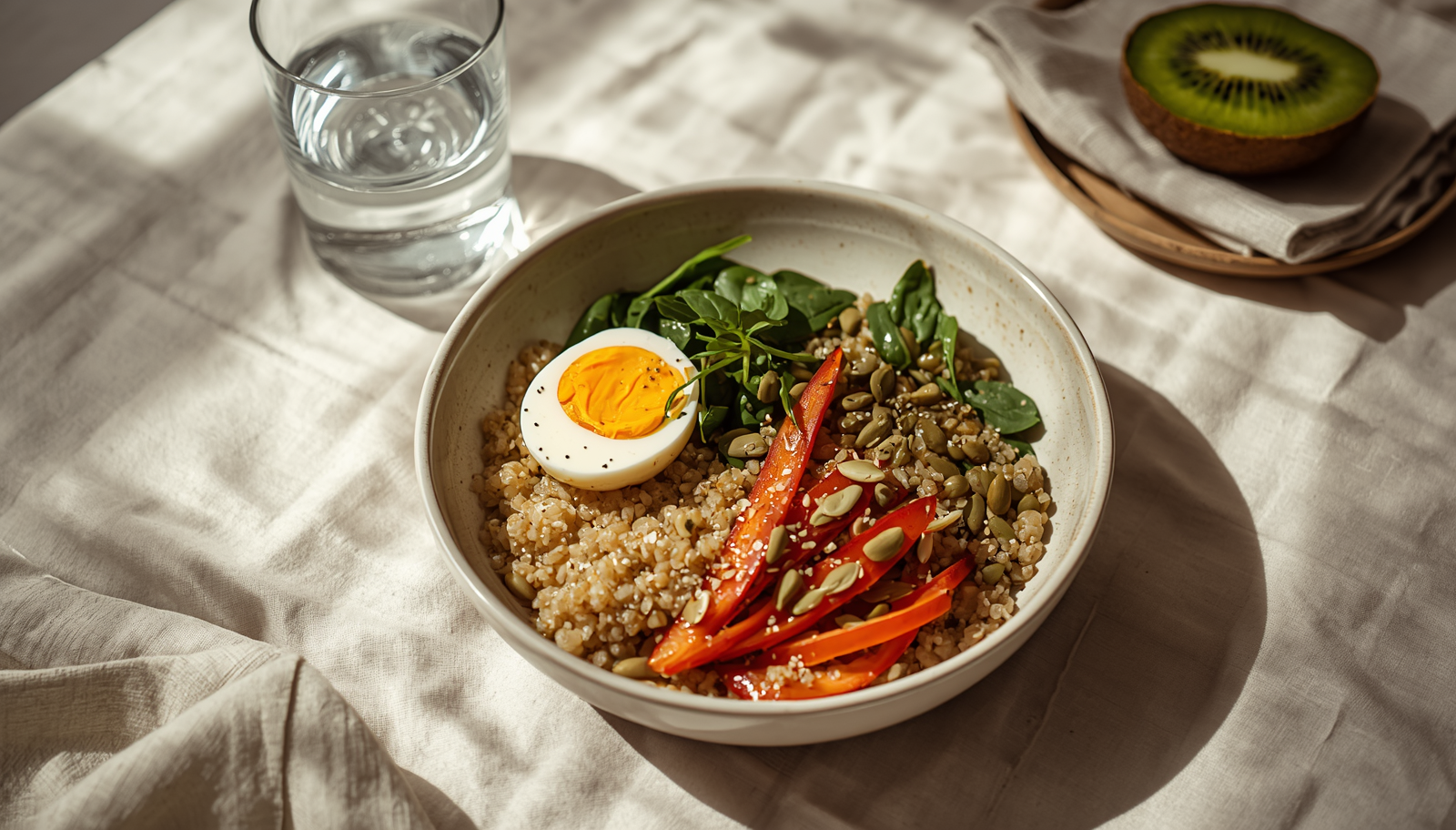
1. Quinoa bowl with egg, spinach, and red pepper
Ingredients:
- 60 g raw quinoa
- 1 egg
- 1 handful of fresh spinach
- 1/2 raw red pepper in strips
- 1 tablespoon pumpkin seeds
- Olive oil and lemon
Preparation: rinse the quinoa under the tap until it stops foaming. The saponins shouldn’t be eaten and rinsing washes them away (they can also leave a bitter taste). Cook until the grains open. Sauté the spinach for a minute. Boil the egg for 8 minutes until the yolk is firm. Combine everything, add the raw pepper and the seeds, and dress with oil and lemon.
Why it works: brings together complete protein (quinoa + egg), zinc (pumpkin seeds), and raw vitamin C (pepper) to lock in collagen. A plate built for repair.
2. Carrot, sweet potato, and ginger cream with seeds
Ingredients:
- 2 carrots
- 1 small peeled sweet potato
- 1 cm fresh ginger
- 400 ml vegetable broth
- 1 tablespoon pumpkin seeds
- Raw olive oil
Preparation: simmer the carrot and sweet potato in the broth for 20 minutes until very tender. Add the grated ginger in the last 5 minutes. Blend until smooth. Serve with the raw oil drizzled on top and the seeds scattered over.
Why it works: sweet potato and carrot bring vitamin A (good for skin) and gentle fiber that doesn’t irritate. The seeds add zinc. A soft texture for the early days.
3. Pan-grilled tofu with steamed broccoli and kiwi
Ingredients:
- 120 g firm tofu (alternative: 120 g chicken or white fish)
- 150 g broccoli florets
- 1 ripe kiwi
- Olive oil, sesame seeds
Preparation: pan-grill the tofu about 2-3 minutes per side until golden (if you use chicken or fish, cook it through, no pink or translucent parts). Steam the broccoli for 6-8 minutes until tender but still green. Serve with sesame and the kiwi for dessert.
Why it works: protein to repair plus a vitamin C bomb (broccoli and kiwi are among the highest-vitamin-C foods there are). Exactly what collagen needs.
4. Oats with kefir, kiwi, and pumpkin seeds
Ingredients:
- 50 g rolled oats
- 200 ml plant milk or milk
- 100 ml plain kefir
- 1 sliced kiwi
- 1 tablespoon pumpkin seeds
Preparation: cook the oats with the plant milk on low heat for 5 minutes until creamy. Let it cool slightly and add the kefir, the kiwi, and the seeds right before serving.
Why it works: gentle fiber (oats) that softens stools, probiotics (kefir) for transit, zinc (seeds), and vitamin C (kiwi). A breakfast that takes care of healing and the bathroom at the same time.
5. Gentle chickpea stew with pumpkin and spinach
Ingredients:
- 150 g cooked chickpeas
- 200 g peeled pumpkin in cubes
- 1 handful of spinach
- 1 teaspoon cumin
- 400 ml vegetable broth
- Olive oil
Preparation: simmer the pumpkin in the broth for 15 minutes until soft. Add the chickpeas and the cumin, cook 5 more minutes, and stir in the spinach at the end until it wilts. Serve with a drizzle of oil.
Why it works: plant protein and zinc (chickpeas), gentle fiber (pumpkin), and plant iron (spinach, useful because postpartum often leaves stores low). The cumin helps with gas so you don’t add abdominal pressure.
6. Baked salmon with sweet potato and broccoli
Ingredients:
- 130 g salmon without bones (vegetarian alternative: 130 g pressed firm tofu)
- 200 g sweet potato in slices
- 100 g broccoli
- Olive oil, lemon
Preparation: bake the sweet potato at 180 °C for about 15 minutes. Add the salmon (or the tofu) and the broccoli and bake another 12 minutes, until the salmon flakes easily with a fork (cooked through, no translucent parts in the center). Serve with lemon.
Why it works: omega-3 from the salmon (supports tissue repair), protein, vitamin C from the broccoli and lemon, and sweet potato as gentle fiber. A complete healing plate.
The bathroom detail that protects the stitches
No matter how well you eat, the bathroom is where the area gets the most strain. Three adjustments that help:
- Don’t push hard. If it isn’t coming, get up and come back in 10-15 minutes. Pushing pulls on the stitches.
- Rest your feet on a low stool while you sit on the toilet. It aligns the rectum and reduces strain.
- Rinse with warm water, not dry paper. A peri bottle or a portable bidet is much gentler on the sutured area.
💡Hydration, fiber's other half
Fiber without enough water hardens stools instead of softening them. Keep a bottle within reach, especially during feeds if you’re breastfeeding, and drink across the day. Gentle fiber plus water is the combination that prevents postpartum constipation, not fiber on its own.
This guide focuses on healing the area. If you’re looking for the full first-two-weeks meal plan after a vaginal birth, I cover it in postpartum recipes after vaginal birth. And if hemorrhoids showed up too, postpartum recipes if you have hemorrhoids is the angle for that piece.
Frequently asked questions
How long does an episiotomy take to heal?
Most stitches heal in 2-3 weeks (a figure referenced by the American College of Obstetricians and Gynecologists, ACOG), and the discomfort drops off noticeably in the first one. Food and avoiding straining at the bathroom help keep the process from dragging out. If after several weeks it still hurts a lot, oozes, or opens up, talk to your healthcare provider.
Are there foods that slow healing down?
More than specific “bad” foods, what slows it down is not covering protein, zinc, and vitamin C, and constipation from lack of gentle fiber and water. Lots of sugar and ultra-processed food doesn’t help either. Prioritize what repairs and keep stools soft.
Do I need supplements to heal better?
With a diet that covers protein, zinc, and vitamin C, you usually don’t need specific supplements for the wound. Iron is its own thing: if your stores ended up low after the birth, your provider may recommend supplementation. Ask them to check ferritin at the postpartum visit.
Can I eat spicy food or citrus with an episiotomy?
Eating them doesn’t directly affect the stitches, which are in a different part of the body than digestion. The vitamin C from citrus actually helps. What’s worth watching is constipation and, if you also have hemorrhoids, that’s where too much spicy food can make going to the bathroom uncomfortable.
Is the diet the same for a tear as for an episiotomy?
For healing purposes, yes: both are wounds in the perineal area that repair with the same materials (protein, zinc, vitamin C) and both benefit from soft stools. Higher-grade tears can take longer to heal, so follow the specific guidance from your midwife or OB-GYN.
Healing an episiotomy or tear well is, mostly, giving the body the materials to repair and keeping the bathroom from straining the area. Protein, zinc, and vitamin C daily, gentle fiber with plenty of water, and patience: in a couple of weeks the worst is behind you. If you want a tool to keep you company through postpartum, one that helps you see how you’re doing without having to remember everything, memobebe is built for this.
Find more on nutrition in our nutrition section.
Related articles
No-cook summer meals for pregnancy
7 no-cook summer meals for pregnancy: fresh, listeria-safe, and built for the hottest days when the oven stays off.
Anti-gas dinners in the third trimester of pregnancy
6 gentle dinners to ease gas and bloating in late pregnancy: what to avoid, how to combine, and why onion and unpeeled legumes don't help.
Postpartum recipes after vaginal birth: first 2 weeks
Vaginal postpartum recipes by phase: what to eat in the first 2 weeks, pre-birth batch-cooking ideas, and nutritional priorities. No medicalization.