

Anti-gas dinners in the third trimester of pregnancy
In the third trimester, gas and bloating have two causes that stack on top of each other. Progesterone relaxes and slows down the gut (an effect described by the American College of Obstetricians and Gynecologists, ACOG), so food sits and ferments longer. And the uterus, now large, presses on your digestive system and leaves less room. The result: you have dinner, and an hour later you’re bloated, with pressure and gas that pushes upward and can bring heartburn as a bonus.
Dinner is where it shows up most, because afterward you lie down and the body stops moving as much. The good news is that it’s pretty manageable through what you have for dinner, how you cook it, and when. This guide gives you 6 gentle single-serving dinners, which foods set off the gas at the end of pregnancy, and which ones help calm it down.
ℹ️This is a general guide
Amounts, cooking times, and nutritional notes here are approximate. They depend on the cut, the oven, your body, and your clinical situation. This isn’t a substitute for your healthcare provider: if your OB-GYN, midwife, or nutritionist gave you different advice, always follow theirs over this guide.
Which foods set off gas (and which ones calm it)
Not all healthy foods sit the same way at the end of pregnancy. Some ferment more in an already slow gut:
| Tend to cause gas | Tend to calm it |
|---|---|
| Raw onion and garlic | Fennel (cooked or as tea) |
| Raw cabbage, cauliflower, and broccoli | Fresh ginger |
| Legumes with skin (whole beans, whole chickpeas) | Cumin and coriander |
| Carbonated drinks | Peeled zucchini and pumpkin |
| Too much fructose (juices, lots of fruit at once) | White or basmati rice |
| Sorbitol-style sweeteners | Mint (as tea) |
The point isn’t to ban anything, it’s to choose for dinner. Raw onion at lunch may sit well; in the evening, better to skip it. Legumes are better peeled or blended (mild hummus bothers you less than a plate of whole chickpeas).
4 rules so dinner doesn’t bloat you
- Small portion and early. A full stomach in a small space presses and ferments more. Eat light, 2-3 hours before bed.
- Gentle cooking, no fried food. Boiled, steamed, oven in parchment. Fried fat slows digestion down even more.
- Eat slowly and don’t swallow air. Eating fast, talking a lot while you eat, or drinking through a straw pulls in extra air, which is half the gas problem.
- Peel and blend. Peeling zucchini and pumpkin, and blending legumes, cuts the fiber that ferments. Your gut thanks you at the end of pregnancy.
💡The 10-minute walk and the tea
A 10-15 minute gentle walk after dinner helps move the gut and release trapped air. And a fennel, anise, or mint tea after dinner (if your provider okays it) is one of the most effective things for gas. Lying down right after dinner is the opposite of what helps.
6 single-serving anti-gas dinners
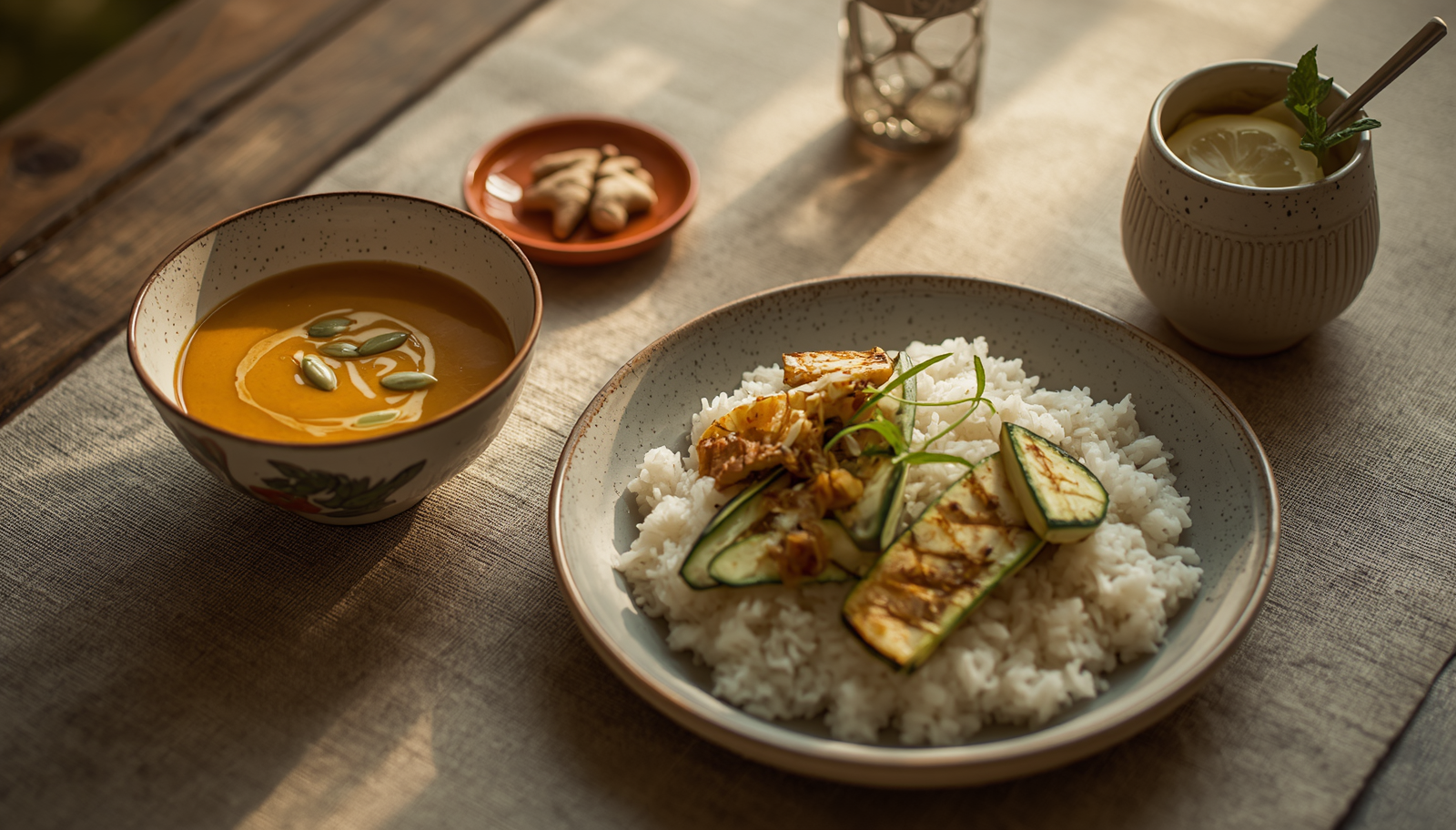
1. Pumpkin, carrot, and ginger soup
Ingredients:
- 200 g peeled pumpkin in cubes
- 1 carrot
- 1 small potato
- 1 cm fresh ginger
- 300 ml mild vegetable broth
- Raw olive oil
Preparation: simmer the pumpkin, carrot, and potato in the broth for 20 minutes until very soft. Add the grated ginger in the last 5 minutes. Blend until smooth and serve with raw oil drizzled on top. No onion or garlic.
Why it works: sweet, easy-to-digest vegetables, none of the ones that ferment. Ginger is carminative (it helps move trapped air). A soft texture that passes through quickly.
2. Basmati rice with peeled zucchini and pan-grilled tofu
Ingredients:
- 50 g raw basmati rice
- 1 medium zucchini, peeled, in half-moons
- 80 g firm tofu in slices
- 1 teaspoon olive oil
- Pinch of salt and cumin
Preparation: cook the basmati according to the package. Sauté the peeled zucchini in a little oil with a pinch of cumin for 6-8 minutes. Pan-grill the tofu for 2 minutes per side. Serve everything together, no sauces.
Why it works: basmati is one of the rices that ferments least, peeled zucchini is very easy to digest, and cumin helps with gas. A light, complete dinner.
3. Potato and carrot mash with steamed white fish
Ingredients:
- 200 g peeled potato in cubes
- 1 carrot
- 120 g hake or sole without bones (vegetarian alternative: 120 g pressed firm tofu)
- 1 teaspoon olive oil
- Pinch of salt
Preparation: boil the potato and carrot for 15 minutes. Mash with some of the cooking water and the oil (no butter or whole milk). Steam the fish for 8-10 minutes until it flakes (cooked through, no translucent parts). If you’re using tofu, pan-grill it.
Why it works: white fish is the protein that digests fastest, and potato and carrot mash is soft and doesn’t ferment. Nothing here to cause gas.
4. Noodle soup with fennel broth and chicken
Ingredients:
- 1/2 fennel bulb in thin slices
- 30 g thin noodles
- 80 g chicken breast in strips (vegetarian alternative: 80 g tofu in cubes)
- 1 carrot in slices
- 400 ml vegetable broth
- Pinch of salt
Preparation: simmer the fennel and carrot in the broth for 12 minutes. Add the chicken in thin strips and cook 8-10 minutes until cooked through. Add the noodles in the last 5 minutes. Serve hot, not boiling.
Why it works: fennel is the anti-gas star (carminative), the broth hydrates without filling you up, and the chicken adds gentle protein. Comforting for a winter dinner.
5. Spanish-style omelet with peeled zucchini and potato
Ingredients:
- 2 eggs
- 150 g potato in thin slices
- 1/2 peeled zucchini in slices
- Olive oil
- Pinch of salt
Preparation: soften the potato and zucchini in a pan with a little oil over low heat for 12-15 minutes until tender. Beat the eggs, stir them into the vegetables, and cook the omelet 3-4 minutes per side, making sure the egg is fully set.
Why it works: egg and potato, a very digestible combo, with peeled zucchini that doesn’t irritate. No onion, which is what usually causes gas in the classic version.
6. Baked sweet potato with tofu and fennel seeds
Ingredients:
- 1 medium sweet potato
- 100 g firm tofu in slices (alternative: 80 g pan-grilled chicken)
- 1 teaspoon fennel seeds
- Olive oil, pinch of salt
Preparation: bake the sweet potato at 200 °C for about 35 minutes until very soft. Pan-grill the tofu with a little oil and the crushed fennel seeds. Serve together, splitting the sweet potato in half.
Why it works: sweet potato is gentle fiber that doesn’t ferment like others do, tofu adds plant protein (usually sits better than a whole legume), and the fennel seeds reinforce the anti-gas effect.
How to combine for an even better fit
Beyond the recipes, one adjustment that helps: gentle protein + peeled vegetable + easy carb. That’s the formula. Avoid stacking several sources of fermenting fiber in the same dinner (for example, whole legumes with skin + raw crucifers).
If heartburn is also waking you up, the dinners in light dinner recipes for pregnancy with nighttime heartburn work for both. And if you’re expecting twins, twin pregnancy recipes for the second trimester covers why pressure and gas show up earlier.
If you want to spot which dinners bloat you and which ones don’t, writing them down for a few days makes it obvious. With memobebe you can log what you ate and how you felt in a couple of taps, and see your own pattern instead of a general piece of advice.
Frequently asked questions
Why do I have more gas at the end of pregnancy than at the start?
Two reasons that stack in the third trimester: progesterone slows the gut (food ferments longer) and the now-large uterus presses on the digestive system. Less room and slower digestion equals more gas and bloating. It’s normal and improves after birth.
Legumes give me gas, do I have to cut them out?
You don’t have to: they bring iron and plant protein, which matter in pregnancy. The trick is how you prep them. Blended (hummus, peeled red lentil soup) or skinless, they ferment much less than a plate of whole chickpeas or beans. For dinner, the blended version sits best.
Which tea is good for gas during pregnancy?
Fennel, anise, and mint are the most commonly used as carminatives. That said, run it by your provider before making them a daily habit, since not all teas are recommended in pregnancy and some you want to moderate.
Do milk and dairy cause more gas?
For some pregnant people, yes, especially if there’s some lactose intolerance, which can intensify. If you notice milk bloats you, try yogurt or kefir (lower in lactose) or calcium-fortified plant drinks, and see how you do.
Does drinking water with meals make gas worse?
Drinking a lot of liquid all at once during dinner stretches the stomach and can ramp up the bloating feeling. Better small sips at the meal and hydrating mostly between meals. And skip carbonated drinks, which add air directly.
Third-trimester gas is uncomfortable but very manageable starting at dinner: small portion, gentle cooking, skipping what ferments, and adding carminatives like fennel and ginger. It isn’t about eating boring, it’s about eating with a gut that now moves slower in mind. If you want a simple system to help you see what sits well with you, memobebe is built for this.
Find more on nutrition in our nutrition section.
Related articles
No-cook summer meals for pregnancy
7 no-cook summer meals for pregnancy: fresh, listeria-safe, and built for the hottest days when the oven stays off.
What to eat to heal episiotomy stitches after birth
What helps episiotomy or perineal tear healing after birth: protein, zinc, vitamin C, and 6 gentle anti-constipation recipes.
Postpartum recipes after vaginal birth: first 2 weeks
Vaginal postpartum recipes by phase: what to eat in the first 2 weeks, pre-birth batch-cooking ideas, and nutritional priorities. No medicalization.