

Anti-nausea recipes for pregnancy: 8 easy ideas
You know you need to eat. Your body needs it, the baby needs it. But you open the fridge and everything makes you gag. The smell of coffee turns your stomach, the thought of cooking feels impossible, and all that “eat healthy” advice sounds like a joke when you can’t even keep a piece of toast down.
If you’re in your first trimester and nausea has taken over, this article is for you. No complicated recipes, no long shopping lists. Just 8 simple preparations with ingredients you probably already have at home, designed for the days when eating feels like an impossible task.
For a full guide on prenatal nutrition, check out our article on pregnancy nutrition.
Why certain foods help with nausea
It’s not a coincidence that ginger, lemon, and plain crackers show up on every list. There are concrete reasons behind each one.
Ginger contains gingerols, compounds that act on serotonin receptors in the digestive tract and reduce the nausea signals reaching the brain. A meta-analysis published in Frontiers in Public Health (Zhong et al., 2023) confirmed its effectiveness for pregnancy nausea, with fewer side effects than conventional treatments.
Vitamin B6 (pyridoxine) is another science-backed ally. ACOG recommends it as the first line of treatment for mild to moderate pregnancy nausea.
Gentle carbohydrates (white rice, toast, crackers) work because they digest quickly and don’t overload the stomach. And cold foods have a practical advantage: they release less aroma than hot ones, which helps when smells feel unbearable.
According to ACOG, 70 to 80 percent of pregnant women experience nausea during the first trimester. It’s one of the most common pregnancy complaints, and despite being called “morning sickness,” it can strike at any hour.
⚠️When to call your doctor
If nausea is severe and you can’t keep liquids down for more than 24 hours, contact your healthcare provider as soon as possible.
8 anti-nausea recipes for pregnancy
All of these recipes are quick, use few ingredients, and don’t involve strong smells. They’re ordered from simplest to those that need a bit more prep.
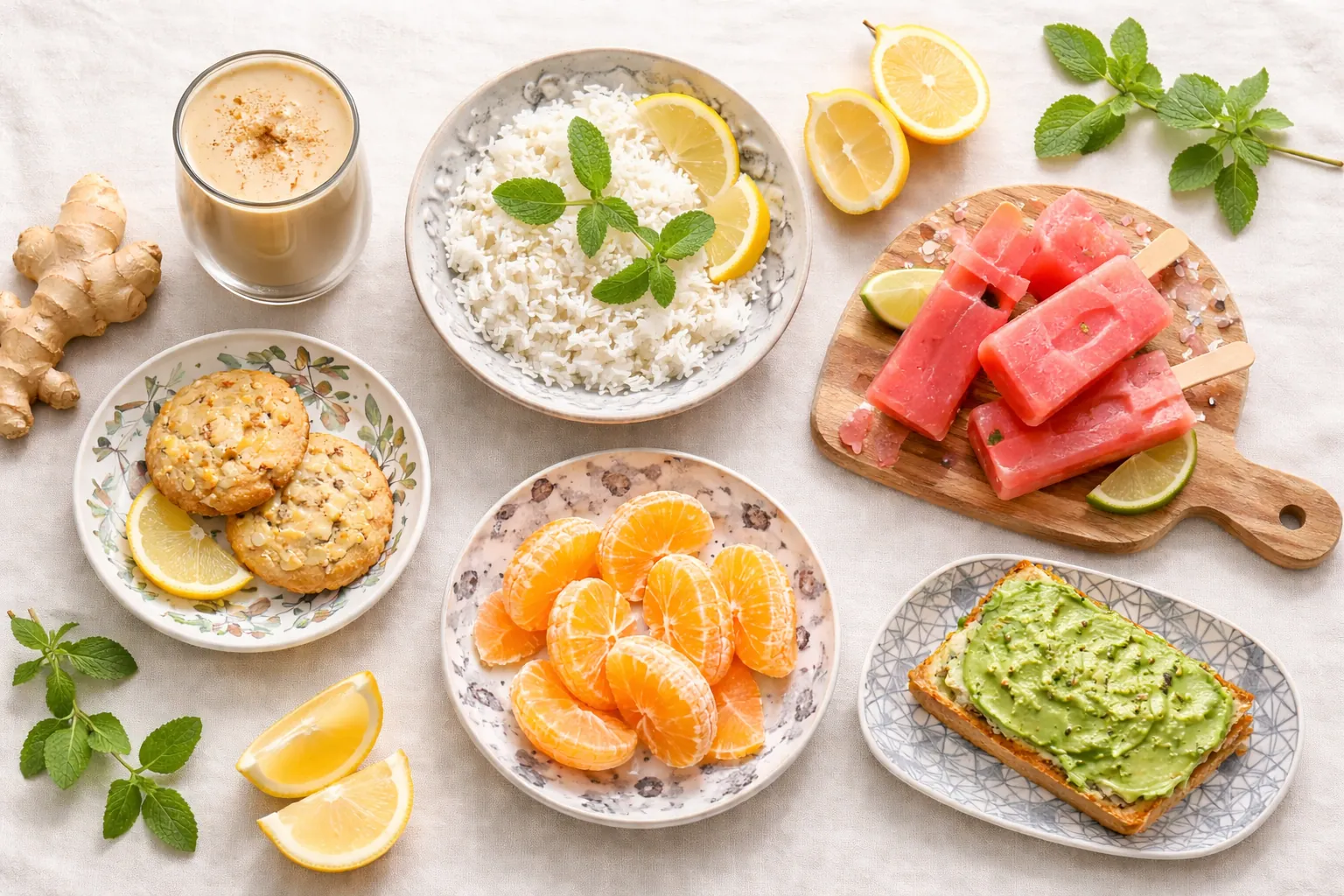
1. Banana and ginger smoothie
Why it works: banana provides vitamin B6 and potassium, ginger fights nausea, and oat milk keeps everything light. It’s cold, smooth, and easy to sip even when you don’t feel like chewing anything.
How to make it:
- Freeze a sliced banana (at least 2 hours ahead).
- Blend the frozen banana with 200 ml (about 3/4 cup) of oat milk and 1 teaspoon of freshly grated ginger.
- Drink slowly, in small sips.
Tip: if fresh ginger feels too strong, use half a teaspoon or swap it for a quarter teaspoon of ground ginger.
2. Oat and lemon cookies
Why it works: oats are a complex carbohydrate that digests without causing acid reflux. Lemon provides a fresh scent that counteracts nausea. These are perfect to keep on your nightstand and eat before getting out of bed.
How to make them:
- Mix 1 cup of oats, the zest of 1 lemon, 2 tablespoons of mild olive oil, and 1 tablespoon of honey.
- Form small balls, flatten them on a baking sheet lined with parchment paper.
- Bake at 350 °F (180 °C) for 15 minutes. Store in an airtight container.
3. White rice with lemon and mint
Why it works: white rice is one of the easiest foods to digest. Mint calms the stomach and lemon cuts through the nausea. Three ingredients, zero complications.
How to make it:
- Cook 1/2 cup of white rice as you normally would.
- Once ready, add a squeeze of lemon juice and chopped fresh mint leaves.
- Store it in the fridge and eat it cold. Cold rice is easier to tolerate and cold foods release less aroma. Never leave cooked rice at room temperature for more than one hour.
4. Watermelon and ginger popsicles
Why it works: watermelon has a high water content and a mild flavor. Frozen, it releases no aroma, and the cold temperature soothes the stomach. Ginger adds its anti-nausea effect.
How to make them:
- Blend 2 cups of seedless watermelon with 1 teaspoon of freshly grated ginger and a squeeze of lemon.
- Pour the mixture into popsicle molds.
- Freeze for at least 4 hours. Great for a mid-afternoon snack.
5. Avocado toast with lemon
Why it works: avocado provides healthy fats, potassium, and folic acid. Its creamy texture is easy to eat, and the lemon helps keep nausea at bay. Toasted bread adds carbohydrates that settle the stomach.
How to make it:
- Toast a slice of bread (your choice, ideally whole grain).
- Mash half an avocado with a fork and spread it on the toast.
- Add a squeeze of lemon and a pinch of salt.
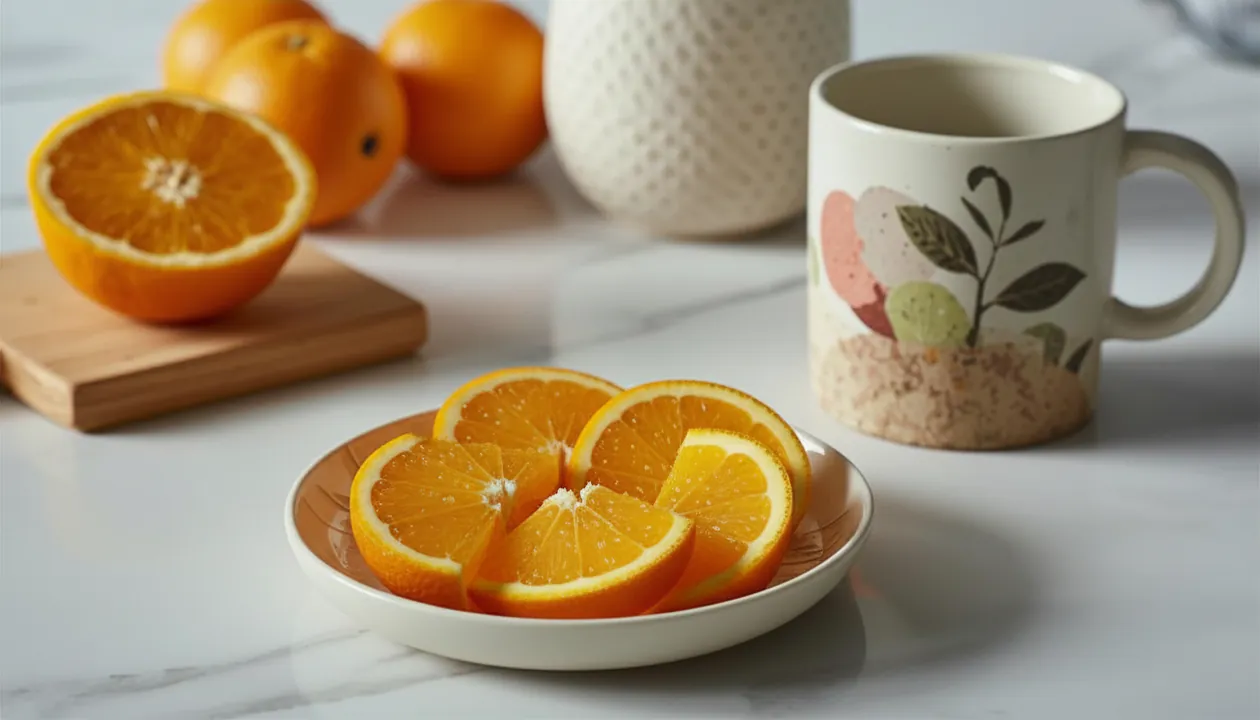
6. Cold oranges from the fridge
Why it works: cold oranges combine the citrus aroma (which helps cut through nausea) with cold temperature (which reduces the feeling of discomfort). They also provide vitamin C and are full of water, which helps with hydration. Many pregnant women report that oranges are one of the foods that sit best during the first trimester.
How to prepare them:
- Peel a cold orange (kept in the fridge for at least 2 hours).
- Eat the segments slowly, savoring the juice.
- You can also slice it into rounds and suck on them like natural popsicles.
7. Frozen yogurt with blueberries
Why it works: the cold reduces smells and the temperature soothes nausea. Yogurt (make sure it’s pasteurized) provides probiotics that support digestion, and blueberries add antioxidants and a mild flavor.
How to make it:
- Mix 1 cup of plain yogurt with 1/2 cup of blueberries (fresh or frozen).
- Pour into a freezer-safe container.
- Freeze for 2 hours, stirring at the 1-hour mark to prevent ice crystals. You can also freeze spoonfuls on a tray for bite-sized portions.
8. Rice crackers with fresh cheese
Why it works: rice crackers are light, odorless, and easy to digest. Pasteurized fresh cheese adds protein and calcium without strong flavors. It’s a snack you can put together in 30 seconds.
How to make it:
- Spread a thin layer of pasteurized fresh cheese on rice crackers (always check that the label says “pasteurized milk”).
- If you can handle lemon, add a few drops on top.
- You can add thin cucumber slices for a fresh touch.
Tips for eating when you feel nauseous
Recipes are part of the equation, but how and when you eat matters as much as what you eat. These habits can make a real difference:
- Eat small portions every 2-3 hours. An empty stomach makes nausea worse. Six mini-meals beat three big ones.
- Choose cold or room-temperature foods. Hot dishes release more aroma, and in the first trimester your sense of smell is more sensitive than ever.
- Keep crackers on your nightstand. Eating something dry before getting out of bed can prevent morning nausea.
- Hydrate with small sips. Don’t drink a full glass at once. Small sips of water, lemonade, or coconut water throughout the day work better.
- Avoid strong smells. If cooking triggers nausea, ask for help or prepare cold meals. Opening windows while cooking also helps.
- Separate liquids from solids. Try not to drink too much during meals. Wait 20-30 minutes after eating before hydrating.
- Write down what works for you. Every pregnancy is different, and what works for one person may not work for another. If you find a food that sits well, save it in your Memobebe notes so you don’t forget it when the nausea comes back.
Memobebe helps you remember everything
Try for freeFrequently asked questions
Is ginger safe during pregnancy?
Yes, ginger is considered safe during pregnancy. ACOG supports its use for nausea, with a recommended dose of up to 1 gram of dried ginger per day (or its equivalent in fresh ginger). A 2023 meta-analysis confirmed it poses no risk to the baby. Just be careful not to exceed the recommended dose, and if you take blood-thinning medication, check with your doctor before consuming it regularly.
When does morning sickness go away?
In most cases, nausea typically improves between weeks 12 and 16 of pregnancy. However, some women experience it for longer, and a small percentage have it throughout the entire pregnancy. If nausea persists past week 20, it’s important to discuss it with your OB-GYN to rule out other causes.
What if I can’t keep anything down?
If you can’t retain food or liquids for more than 24 hours, contact your healthcare provider. In the meantime, prioritize hydration with small sips of water, diluted lemonade, or coconut water. Dry foods like crackers or toast tend to be the most tolerable. Don’t pressure yourself to eat “healthy” on those days: what matters is keeping something down. Your doctor may prescribe vitamin B6 supplements or safe medication if nausea doesn’t respond to dietary changes.
Pregnancy nausea is temporary, even though it doesn’t feel that way while you’re living it. What matters is finding what works for your body, without guilt and without pressure. If something doesn’t sit well, don’t force it. Try something else, a different time of day, a different temperature.
For more foods that help with pregnancy discomfort, read our article on foods that relieve nausea, heartburn, and constipation. Explore more recipes and tips in our nutrition section.
Related articles
No-cook summer meals for pregnancy
7 no-cook summer meals for pregnancy: fresh, listeria-safe, and built for the hottest days when the oven stays off.
Anti-gas dinners in the third trimester of pregnancy
6 gentle dinners to ease gas and bloating in late pregnancy: what to avoid, how to combine, and why onion and unpeeled legumes don't help.
What to eat to heal episiotomy stitches after birth
What helps episiotomy or perineal tear healing after birth: protein, zinc, vitamin C, and 6 gentle anti-constipation recipes.